Showing posts with label acne no more book.acne no more pdf. Show all posts

Wednesday, 24 October 2012

Acne No More Review - Review About The Signs of Acne


Establishing the influence of hormonal status on the course of acne in some cases is an important element in the diagnosis of acne. Thus, the definition of free testosterone -sulfate, luteinizing hormone just shows women with symptoms: hirsutism, irregular menstruation, alopecia, with the development of acne in period or during late manifestation of acne (after 25 years), as well as treatment failure severe acne with isotretinoin.
In cases resistant to therapy and explore the levels of other hormones, progesterone, pituitary hormones. Significant role in the development of acne is withdrawn pathological follicular canal. Normally, in the lumen there is a thin layer consisting of easily rejects corneocyte. Acne rejection process is slowed down as a result of violations of the qualitative or quantitative composition of intercellular lipids, and as a result of insufficient disintegration of desmosomes of keratinocytes in the stratum .

This leads to disruption of normal exfoliation of corneocytes and promotes retention hyperkeratosis, which is against the background of the strong cohesion of corneocytes ultimately promotes clogging of the sebaceous glands and the formation of horny masses microcomedo. If the outlet openings of the sebaceous glands are dilated (with hyperkeratosis), formed open comedones, which visually appear as small black head with a diameter of 1-3 mm.


When hyperkeratosis not occur expansion pin holes, and closed comedones are formed, they look like little white heads up to 2 mm in diameter. Closed comedones are transformed into cells or inflammatory, gradually increasing in volume, turn into open comedones. Blockage of ducts of the sebaceous glands leads to the cessation of air in their cavity, which creates conditions for rapid multiplication propionibacterium acne. Propionibacterium acne, in turn, plays an important role in the formation of comedones and inflammatory reactions in their rash. This is facilitated by a number of factors:

Propionibacterium acne synthesize, easily penetrating through the wall of the follicle and attracting white blood cells that form the infiltrate around the follicle and are involved in the release of lysosomal enzymes that damage from the outside wall of the follicle; propionbakterii acne synthesize lipase splits triglycerides sebum to free fatty acids that damage the follicle wall from the inside; directly or indirectly damaging the follicle wall, propionibacterium acne facilitate contact comedone content with the surrounding tissue, causing inflammation, which may take the form of both surface rash and deep nodes.

The number of bacteria in the rash does not correlate with disease severity. If pimples and rashes are characterized by a high degree of contamination propionibacterium acne, the nodular formation of their number is minimal. This is due to the generation of oxygen by leukocytes, detrimental effect on anaerobic microorganisms, as well as propionibacterium acne surrounding cells.

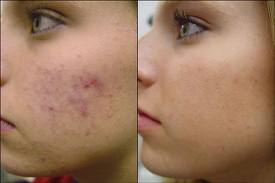
Acne No More Review - Clinical Symptoms of Acne


Clinical Symptoms Of Acne
Acne (acne) is a clinically and heterogeneous group of lesions of the sebaceous glands, which proceeds with the formation of comedones and inflammatory skin problem.
Allocate acne newborn, infant, youth and late. Baby acne occurs during hormonal crisis as a time of hypertrophy of the sebaceous glands and miliums.


Infant acne is observed in children aged 6 months to 2-3 years of age are usually inflammatory in nature and develop against transient disorders of inhibition of endogenous steroids. Later acne appear aged 30-40 years against the pathology of adrenal hyperandrogenism or reproductive glands, which is accompanied by metabolic disorder in sebocytes, increased sensitivity of the receptors to testosterone metabolites, as well as other changes that affect the development of acne.

Teenage acne are found in 80-90% of adolescents. Most of them are 18-20 years to reverse the development of acne, 20% of patients, this process is delayed, and in 1.5% of men and 0.4% of women the disease becomes severe during the formation of the deep scars and pigmentation.


Learn How To Get Started and look like Vince!


Factors affecting the development of the youth of acne:
 Violation of the quality and quantity of sebum;
Changes in hormonal status;
Abnormal keratinization of the follicular canal;
Intensive colonization propionbaktery acne sebaceous glands;

Moreover, the symptoms are also indicated with the development of inflammatory reactions in the Perifollicular areas with Genetic predisposition. Quality and quantity of sebum have a significant impact on the development of acne. Sebum lipids consist of two components: the epidermal lipids and lipids are synthesized in the sebaceous glands.

When there is a reduction of the content of epidermal lipids and increased secretion of lipids in the sebaceous glands of the increase in their follicular cholesterol sulfate. The latter enhances the adhesion of corneocytes and largely contributes to a retentive hyperkeratosis, which is the cause of abnormal keratinization mouth sebaceous follicle. When acne occurs as a quantitative change of sebum, which is an important condition for the formation of acne and is often correlated with disease severity of acne.

Secretion of fat depends on many factors: gender, age, temperature, time of day (high and low secretion morning - evening), but mostly it is an indicator of androgenic activity, which results in the future to acne.